


CAPITAL STACK & SCOPE THRESHOLDS
Comparing Multifamily Renovation Loan Programs: Freddie Mac, Fannie Mae, HUD 223(f) & Bridge Debt
Selecting the right debt vehicle for a 50- to 350-unit Chicagoland apartment repositioning requires matching the physical scope of work—measured both in hard dollars per unit and in building-system intensity—directly to lender eligibility thresholds. Sponsors who size a cosmetic loan for a building that actually requires riser replacements, electrical service upgrades, or major common-area reconstruction hit loan-document walls mid-project.
Agency programs from Freddie Mac, Fannie Mae, and FHA/HUD offer compelling leverage, non-recourse terms, and lower spreads than private debt funds, but impose strict definitions on what qualifies as "value-add," "moderate rehabilitation," or "substantial rehabilitation." The decision matrix below summarizes the core construction-scope and draw mechanics owners and asset managers must align before locking rate or signing a Guaranteed Maximum Price (GMP) contract.
Multifamily Renovation Financing Programs: Scope Limits, Wage Rules & Draw Mechanics
| Debt Program | Renovation Budget & Scope Boundaries | Draw & Escrow Structure | Key GC & Compliance Triggers |
|---|---|---|---|
| Freddie Mac Value-Add Loan | $10,000 – $25,000 per unit; at least 50% of budget must be spent on apartment unit interiors. | Short-term floating-rate IO sized on as-is value; rehab typically funded out of sponsor equity rather than loan advances, with monitored completion milestones. | Tight completion window to convert into permanent agency takeout; high unit-turn velocity (30–50+ units/mo) protects lease-up DSCR. |
| Freddie Mac Moderate Rehab Loan | $25,000 – $60,000 per unit; minimum $7,500 per unit allocated specifically to residential interiors. | Periodic draws of unfunded loan proceeds reimbursing up to 80% of verified renovation costs via lender inspection & servicer approval. | Requires formal third-party inspection sign-off per draw, clean SOV tracking, and schedule adherence to preserve permanent takeout terms. |
| Fannie Mae Moderate Rehabilitation (DUS) | Significant value-add upgrades (typically >=$8,000/unit; budgets >$20,000/unit require a formal Rehabilitation Work Evaluation Report & Reserve Agreement). | Custodial Completion/Repair Escrow funded at closing (up to 125% for select Green Rewards measures); draws limited to actual completed cost with 75% release rule flexibility. | Mandatory progress inspections confirming work matches approved plans; surplus escrow released only after 100% completion, lien waivers, and clean title endorsement. |
| HUD / FHA Section 223(f) (Purchase / Refi) | Moderate repairs below HUD inflation-adjusted per-unit base cap multiplied by Chicago High-Cost Factor (often $50,000+/unit), AND replacing fewer than 2 of 5 major building systems. | Non-recourse 35-year fixed permanent debt; repair escrow held at closing (often 110%–120% of repair estimate) disbursed via MAP lender & HUD inspection. | NO Davis-Bacon prevailing wage under 223(f); however, replacing 2+ major systems (structure, envelope, mechanical, electrical, plumbing) triggers 221(d)(4) & Davis-Bacon! |
| Debt Fund / Bank Bridge Loan | Flexible heavy value-add, condo deconversion, or adaptive reuse ($30,000 to $180,000+/unit) with no agency interior/system caps. | Future-funding CapEx facility disbursed monthly in arrears (typically 75%–100% of hard/soft draw) through construction title escrow after third-party inspector site visit. | Interest-reserve burn makes every 2-week draw delay expensive; strict Illinois title date-down endorsements and balance-to-complete cost-to-complete tests. |
Program parameters, high-cost multipliers, and reserve cushions are subject to periodic FHFA, Freddie Mac, Fannie Mae, and HUD MAP Guide updates. Always confirm exact loan covenants with your DUS, Optigo, or MAP lender prior to bidding.
ARCHITECTING LENDER-READY BILLING
Aligning the GMP Schedule of Values With Lender Escrows & AIA G702/G703 Pay Applications
Draw friction almost always begins before the first hammer swings—when the general contractor’s construction contract Schedule of Values (SOV) fails to match the line-item budget inside the loan agreement. When a lender’s Rehabilitation Reserve Agreement tracks CapEx by "Unit Interior Turns (per unit)," "Common Area Corridors," "Roof Replacement," and "MEP Risers," but the GC bills by 40 unmapped CSI trade codes, every monthly draw triggers manual reconciliation questions from the lender’s construction consultant and servicer.
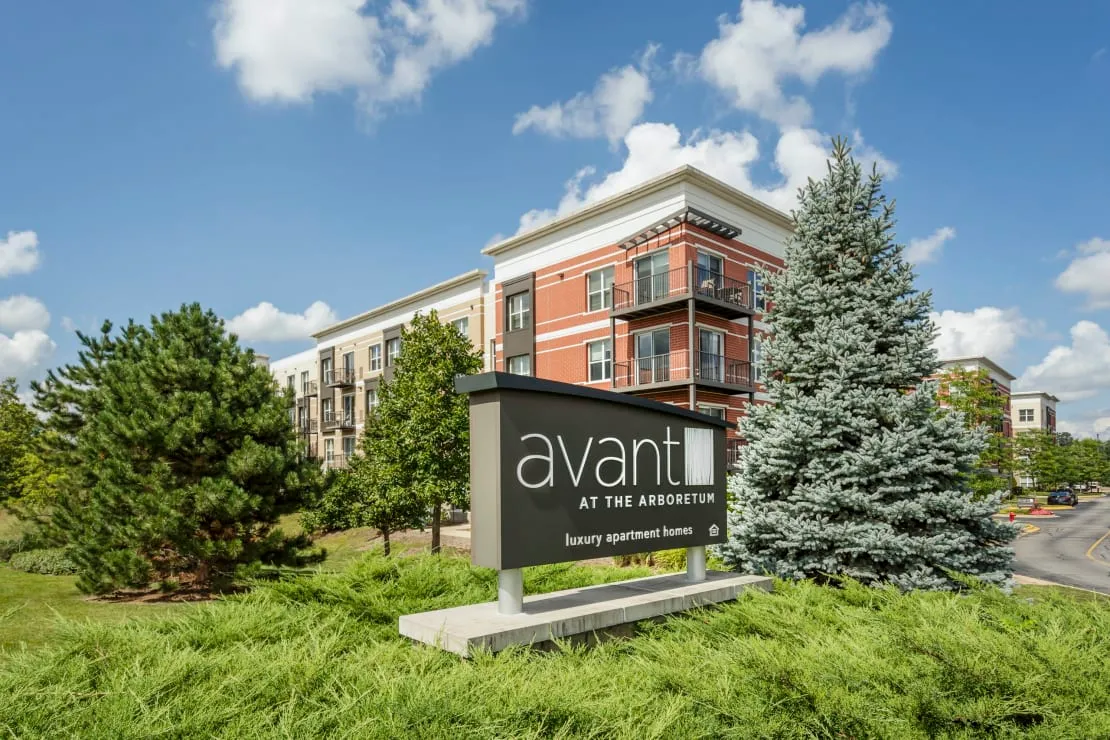
At 3F Construction, our preconstruction and accounting teams map the open-book CMAR/GMP Schedule of Values directly to the lender’s approved CapEx budget before closing. On high-volume occupied unit-turn programs—such as Avant at the Arboretum (310 units for Waterton Residential) or 415 Premier (221 units for Spirit Investment Partners)—we structure unit-turn billing around auditable unit completion matrices (e.g., Unit #402 Demo/Rough 40%, Finishes 40%, Punch/Turned 20% or 100% per completed unit) so third-party draw inspectors can walk five random units in 30 minutes and sign off the entire draw request immediately.
- AIA G702 / G703 Precision & Retainage Tracking: Every monthly draw uses standardized AIA Document G702 (Application and Certificate for Payment) and G703 (Continuation Sheet) displaying original contract value, approved change orders, prior billings, current period completion, stored materials, statutory retainage (typically 10% until 50% complete, then stepping down to 5% or 0% on subsequent billings per loan agreement), and balance to finish.
- Handling Direct Factory Material Procurement & Deposits: One nuance institutional owners must negotiate upfront with agency and bridge lenders is direct factory procurement. Because 3F purchases cabinetry, quartz slabs, LVT plank flooring, porcelain tile, and plumbing fixtures directly from domestic and overseas manufacturers to eliminate distributor markups, factory deposits (typically 30%–50%) occur weeks before on-site installation. Structuring an approved "Stored Materials / Off-Site Deposit" clause—backed by bonded warehouse receipts, bills of sale, and inland-marine insurance certificates—allows lenders to reimburse factory-direct buyouts without starving project cash flow.
- The Loan-in-Balance ("Cost-to-Complete") Test: Before releasing any draw, bridge and agency servicers verify that remaining unfunded CapEx proceeds plus remaining borrower equity equal or exceed 100% of the verified cost to finish the project. Under an open-book GMP tracked monthly in Procore, 3F delivers forecasted cost-to-complete reports and contingency logs every cycle so lenders never issue a surprise "equity rebalancing" demand.
- Managing the Fannie Mae 75% Escrow Release Milestone: Under Fannie Mae’s Multifamily Selling and Servicing Guide, once 75% of total Completion/Repair Escrow dollars have been disbursed, servicers gain greater flexibility on interim releases provided completed work is verified, remaining funds mathematically cover all outstanding scope, and ownership executes required completion affirmations. Maintaining clean draw history through the first 75% unlocks faster late-stage liquidity.
ILLINOIS STATUTORY COMPLIANCE
Illinois Mechanics Lien Act Section 5, Sworn Statements & Chicago Title Construction Escrows
Construction draw administration in Chicago operates under one of the strictest title-escrow frameworks in the United States. Because mechanics liens under the Illinois Mechanics Lien Act (770 ILCS 60/) can achieve priority over a construction lender’s mortgage for the value of enhancements performed, institutional lenders in Chicagoland almost universally disburse renovation draws through a construction escrow agent such as Chicago Title Insurance Company or First American Title.
Under Section 5 of the Illinois Mechanics Lien Act, the general contractor is legally required to deliver a notarized Contractor’s Sworn Statement to the owner and title disbursing agent before receiving any payment. That sworn statement must itemize every subcontractor and material supplier on the project, their original contract amount, approved extras, amounts previously paid, current draw amount due, and remaining balance to complete. If a contractor omits a sub-tier vendor or submits mismatched numbers, the owner and lender face statutory double-payment exposure—so title examiners immediately freeze the entire draw until every penny reconciles.
Anatomy of a Zero-Delay Illinois Construction Title Escrow Draw Package
| Required Draw Document | Legal / Lender Function | Common Error That Freezes Funding | 3F Construction Control Standard |
|---|---|---|---|
| AIA G702 / G703 Pay Application | Certifies % complete per SOV line item, approved change orders, retainage, and net current payment due. | Billing unapproved change orders or exceeding line-item caps without contingency transfer authorization. | Pre-pencil walk with lender inspector & owner 5 days prior to formal submission. |
| Notarized Section 5 Contractor’s Sworn Statement | Statutory disclosure under 770 ILCS 60/5 listing all trades, contract values, prior payments, current due, and balance. | Missing lower-tier material suppliers, stale contract totals after COs, or missing notary jurat/seal. | Reconciled line-for-line in accounting against Procore subcontracts before notarization. |
| Trailing Partial Waivers to Date (Subcontractors & Suppliers) | Proves every trade paid in the PREVIOUS draw actually received funds and waived lien rights through that date. | Missing trailing waiver from a single $4,000 supplier holds up a $450,000 monthly draw. | Automated waiver-tracking gate: no current disbursement releases to any trade missing prior trailing waivers. |
| Current Conditional Waivers + Contractor’s Affidavits | Combined Chicago Title waiver/affidavit forms covering current draw amounts upon receipt of payment. | Dollar mismatch between sub waiver and GC Sworn Statement, or unnotarized Affidavit section. | Standardized Chicago Title forms enforced at subcontract execution and audited by 3F finance team. |
| Third-Party Inspector Sign-Off & Procore Photo Log | Independent physical verification for Fannie, Freddie, HUD, or bridge lender confirming installed progress. | Inspector cannot access occupied units or verify concealed MEP rough-ins already closed behind drywall. | Procore in-wall photo logs, DOB rough-inspection sign-offs, and pre-coordinated unit access keys. |
| Title Date-Down Endorsement & Final Waivers (Closeout) | Updates lender’s title policy through current disbursement date confirming zero recorded liens. | Unresolved municipal building violation, missing final DOB sign-off, or open punch-list dispute. | Continuous Procore punch closeout, DOB permit closeout tracking, and Final Waiver exchange at retainage release. |
While ordinary Illinois lien waivers do not require notarization by statute, standard Chicago Title combined Waiver of Lien and Contractor’s Affidavit forms require notarization of the Affidavit portion to clear escrow.
PROTECTING WORKING CAPITAL & SCHEDULE
The 30-Day Draw Cycle Blueprint: Compressing Funding Lag From 45 Days to 14 Days
On a 200-unit Chicagoland renovation billing $600,000+ monthly, a 25-day lag between month-end completion and title-escrow disbursement strains working capital, slows crew staffing, and extends interest carry. 3F Construction compresses funding cycles to 10–15 days via a disciplined "pencil-draw" calendar:
Monthly Construction Draw Execution Checklist
- Day 22: Walk the site with ownership and the lender’s third-party inspector ("pencil draw") to agree on projected month-end completion percentages and unit counts before billing locks.
- Day 24: Reconcile all pending change orders and contingency draws inside Procore so zero unapproved extras appear on the pay application.
- Day 25: Collect subcontractor invoices, current conditional waivers/affidavits, and 100% of trailing unconditional waivers from the prior funded draw.
- Day 27: Cross-audit subcontractor billings against the Section 5 Sworn Statement, verifying legal entity names, contract totals, retainage, and notary seals.
- Day 28: Attach stored-material backup (bills of sale, bonded warehouse receipts, photos, insurance certificates) for approved factory-direct finish packages.
- Day 1: Transmit complete digital draw binder (AIA G702/G703, Sworn Statement, waivers, Procore photo report, DOB inspection tickets, MS Project schedule) to owner, lender, inspector, and title officer.
- Days 3–7: Clear single-item inspector or title-examiner questions within 24 hours via Procore records so the draw never recycles.
- Days 8–15: Lender approves requisition, orders Chicago Title date-down endorsement, wires funds to escrow, and disburses to trades—triggering next month’s trailing-waiver gate.
- Closeout: Complete final agency/HUD/lender walk and deliver O&M manuals, as-builts, DOB sign-offs, and Final Waivers to release retainage and surplus escrow.
ALIGNING CONSTRUCTION VELOCITY WITH INVESTMENT RETURNS
How Draw Velocity, Interest Carry & Direct Procurement Impact Multifamily Deal IRR
Construction management is ultimately capital management. When modeling a value-add refinancing or acquisition in Chicago, sponsors rightly scrutinize interest rates and exit cap rates—yet often overlook how construction duration and draw friction compound inside the equity waterfall. Turning 200 occupied units at 45–50 units per month versus 15 units per month cuts active renovation duration by nearly nine months, dramatically accelerating renovated NOI, shortening bridge-loan interest carry, and allowing earlier refinancing into fixed-rate Fannie Mae, Freddie Mac, or HUD 223(f) permanent debt.
Similarly, pairing an open-book CMAR/GMP contract with 3F Construction’s direct material procurement model lowers total funded Cost of the Work—meaning sponsors draw fewer debt dollars per unit, maintain healthier Debt Service Coverage Ratios (DSCR) during lease-up, and unlock larger permanent takeout proceeds upon stabilization. Model your exact unit count, renovation budget, rent lift, and timeline in our interactive Multifamily Renovation ROI Calculator, then engage 3F during preconstruction to structure a lender-ready SOV and draw workflow before loan closing.
Interactive Planning Tool & Preconstruction Review
Model Your Chicago Multifamily Renovation ROI
Test per-unit renovation budgets, projected rent premiums, yield on cost, and cap-rate value creation with our Chicago Multifamily Renovation ROI Calculator — or walk your property with 3F Construction’s developer-led preconstruction team.
Verification & Primary References
Official Sources & Citations
Regulatory standards, fee schedules, and statutory references cited in this guide are verified against primary municipal, state, and federal publications.
- Freddie Mac Multifamily Moderate Rehab & Value-Add Loan Product Specifications
Freddie Mac Multifamily — Per-unit renovation thresholds ($10K–$25K Value-Add; $25K–$60K Mod Rehab), interior minimums, and 80% periodic cost-reimbursement draw structure.
- Section 223(f) Mortgage Insurance for Purchase or Refinancing of Existing Multifamily Housing
U.S. Department of Housing and Urban Development (HUD) — FHA 35-year non-recourse permanent financing guidelines, moderate repair caps, two-major-system substantial rehab boundary, and Davis-Bacon exemption.
- Fannie Mae Multifamily Selling and Servicing Guide — Completion/Repair & Rehabilitation Reserves
Fannie Mae Multifamily — Custodial escrow administration, >$20,000/unit Rehabilitation Work Evaluation Report rules, inspection verification, and 75% disbursement threshold.
- Illinois Mechanics Lien Act (770 ILCS 60/ — Section 5 Contractor’s Sworn Statement)
Illinois General Assembly — Statutory owner/lender protection requiring notarized general contractor sworn statements and verified subcontractor lien waivers for Illinois construction draws.